Yellow jackets
Yellow jacket nest removal
Yellow jackets build big paper nests, usually underground or inside a wall, and they defend them. This is the wasp nest most worth leaving to a pro.
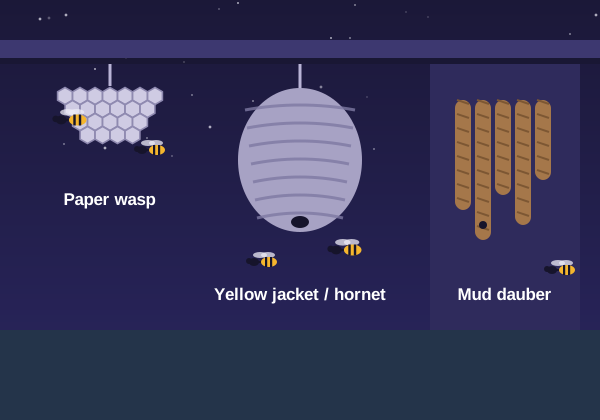
How to spot a yellow jacket nest
- Steady traffic of black-and-yellow wasps into a single small hole in the lawn, a bank, under a step, or a crack in siding or a soffit
- The nest itself is usually hidden: several layers of paper comb wrapped in a paper envelope, often much bigger than a paper wasp nest
- Late summer is when colonies are biggest and most defensive, and when most people get stung mowing or trimming
- The "baldfaced hornet" is a black-and-white yellow jacket that hangs a big gray paper ball in trees or under eaves
Why this one needs a pro
- Yellow jackets defend the nest and, unlike honey bees, can sting more than once.
- Ground and wall nests are hidden, so it's hard to treat the actual nest from outside.
- Plugging a wall entrance while the nest is active can send wasps into the house.
How a company handles it
- Finds the entrance and works out where the nest sits.
- Treats the nest, usually at dawn or dusk when the wasps are home.
- Comes back or confirms it's inactive, removes what can be reached, then seals the gap.
Don't do this
- Don't pour gasoline, water or boiling water down the hole.
- Don't block the hole in a wall while wasps are active.
- Don't mow, trim or dig near a ground nest until it's handled.
Prices: see wasp nest removal cost. Not sure it's yellow jackets? Check with the bee-or-wasp identifier. Small, fuzzy, calm bees going into lawn holes in spring are usually ground bees, not yellow jackets.
Sources
Get a free quote
Tell us what you're seeing. We'll send it to one local company that handles it, and they'll reach out. No cost, no obligation.
✓ 1 local company, not 5 · ✓ Free · ✓ No obligation
Common questions
Are yellow jackets bees?
No. Yellow jackets are wasps. They have smooth, shiny bodies, build paper nests and eat insects and sweets. Honey bees are fuzzy and build wax comb.
When are yellow jackets worst?
Late summer into fall, when colonies are largest and food is scarcer.
Will the nest come back next year?
A colony usually lasts one season, but a new queen can start a nest in the same kind of spot. Sealing gaps in the house helps.